
Does Lavender Actually Help You Sleep? What the Research Says…
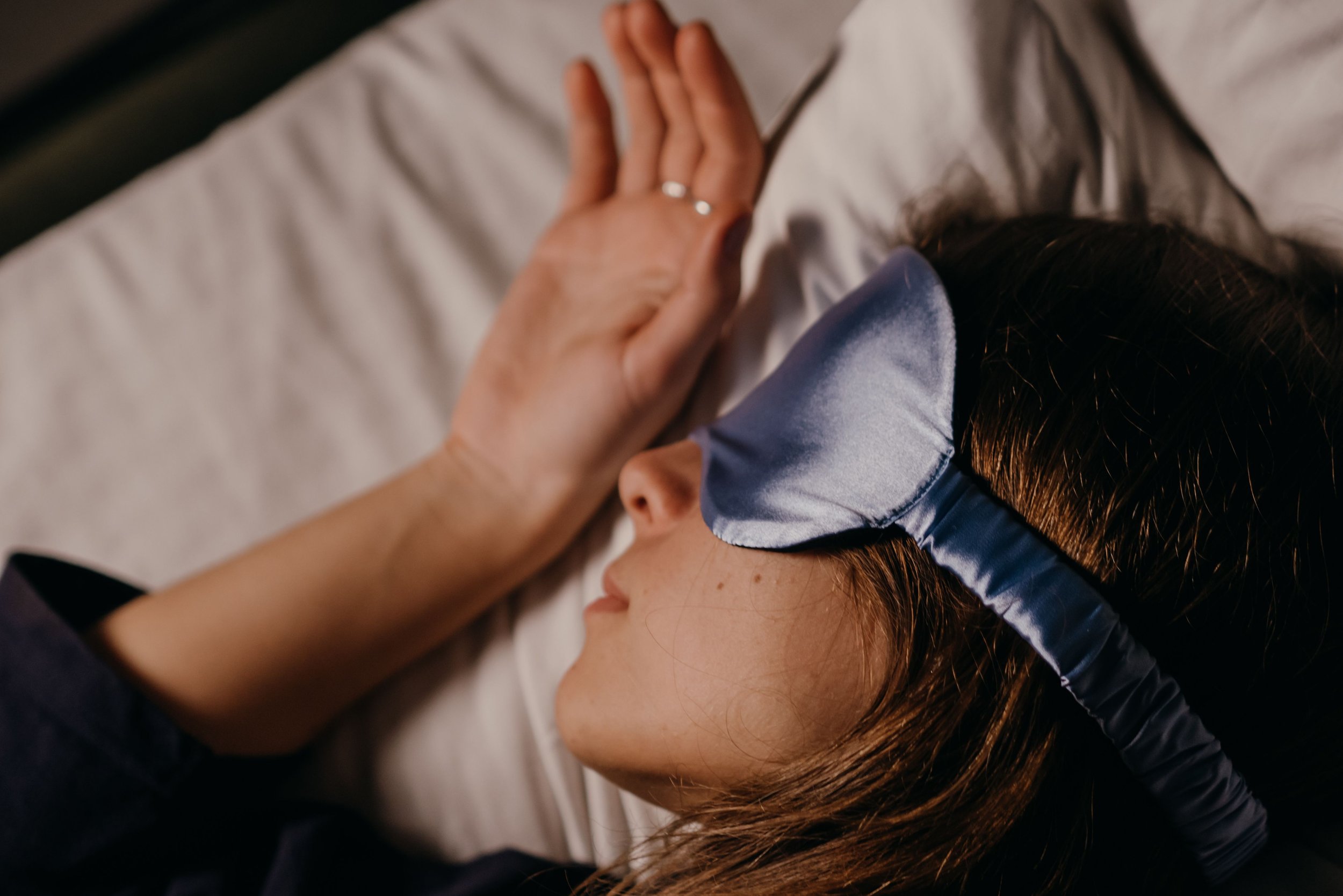
Does Lavender Actually Help You Sleep?
What the Research Says…
Lavender has been used as a folk remedy for restlessness for centuries, but the question worth asking is whether lavender actually helps you sleep according to controlled, peer-reviewed research — not just tradition. Over the last decade, a growing body of clinical evidence, including randomized controlled trials (RCTs) and systematic meta-analyses, has moved this question out of folklore and into the realm of measurable, statistically significant outcomes.
Below, we walk through what the highest-quality evidence currently shows, the proposed biological mechanism behind it, and how these findings translate into practical use.
What the Highest Level of Evidence Shows
The strongest form of scientific evidence comes from meta-analyses, which pool data across multiple independent trials to produce a more statistically reliable estimate than any single study can offer on its own.
A 2026 systematic review and meta-analysis published in Holistic Nursing Practice analyzed 11 randomized controlled trials encompassing 628 adult participants and found that lavender essential oil produced a statistically significant sleep-enhancing effect, with a standardized mean difference of –0.56 (95% CI: –0.96 to –0.17, P = .005).¹ In plain terms, this indicates a moderate, reliable improvement in sleep outcomes across a fairly large and diverse pool of adult participants — though the authors were careful to note that larger, higher-quality trials would help confirm the strength of this effect going forward.
The Proposed Biological Mechanism
Clinical outcomes are more convincing when there's a plausible biological explanation behind them, and lavender's case is unusually well developed for a botanical.
The primary active compound responsible for lavender's calming properties is linalool, a terpene alcohol that makes up a substantial portion of true lavender essential oil. Research published in Frontiers in Behavioral Neuroscience demonstrated that linalool odor produces measurable anxiolytic (anxiety-reducing) effects, and that this effect is mediated through GABA-ergic transmission via benzodiazepine-responsive GABA_A receptors — the same broad receptor pathway targeted by common anti-anxiety medications, at a markedly gentler scale.² Because this study used an olfactory (scent-based) delivery method and controlled for smell-blocked subjects, it offers a mechanistic explanation for why inhaled lavender in particular appears to influence the nervous system's ability to downshift into rest.
Evidence from Clinical Populations
Beyond healthy adults, lavender inhalation has also been studied in populations with heightened, medically-documented sleep disruption — arguably a more rigorous test than studying people with only mild, everyday sleeplessness.
In a 2025 single-blind RCT published in Supportive Care in Cancer, 100 patients with hematological malignancies undergoing chemotherapy were randomized to receive either lavender oil inhalation or a saline control for 20 minutes nightly over five consecutive nights. The lavender group showed significantly higher scores on the Richards-Campbell Sleep Questionnaire compared to the control group (70.80 vs. 59.16, P = .001), along with significantly lower fatigue scores.³
Separately, a 2025 randomized controlled trial in Frontiers in Pharmacology examined lavender essential oil inhalation in postoperative patients recovering from intracranial tumor surgery — a population with substantial, clinically-monitored sleep disruption — and found measurable improvements in total sleep duration and deep sleep duration compared to a no-intervention control group.⁴
Taken together, these studies suggest that lavender's sleep-related effects hold up even in clinically vulnerable populations, not just in low-stakes self-reported surveys of generally healthy sleepers.
Bringing This Into Your Nightly Routine
Most of the clinical protocols reviewed above used a strikingly simple approach: a small, consistent dose of lavender essential oil inhaled for roughly 15–20 minutes before bed, applied consistently over several nights rather than as a one-time fix.
That's a fairly easy ritual to build into an existing wind-down routine — a few drops on a pillow, a cotton pad, or a diffuser near the bed, done nightly rather than sporadically. Our Lavender Essential Oil is steam-distilled on-site here in Traverse City, Michigan, in small batches, so what's in the bottle is simply lavender — no synthetic fillers or fragrance additives standing between you and the research above.
Frequently Asked Questions
Is there real scientific evidence that lavender helps you sleep? Yes. A 2026 meta-analysis of 11 randomized controlled trials involving 628 adults found a statistically significant improvement in sleep outcomes associated with lavender essential oil use, and multiple individual clinical trials in specific patient populations have supported this finding.
How does lavender affect the brain? Lavender's primary compound, linalool, is believed to interact with GABA receptors in the brain — the same general pathway targeted by common anti-anxiety medications — which may help explain its calming, sleep-supportive effects.
How long does it take for lavender to help with sleep? In most clinical trials, lavender was inhaled for 15–20 minutes before bed, applied consistently over multiple nights, rather than used as a single one-time application.
Is inhaled lavender essential oil better than other forms for sleep? Most of the strongest clinical evidence to date specifically involves inhalation (diffusing or placing lavender oil near the bed), which is also the easiest and safest method for most people to use nightly.
References
Shen H, Zhang LJ, Zhu WY. The Sleep-Enhancing Effect of Lavender Essential Oil in Adults: A Systematic Review and Meta-Analysis. Holistic Nursing Practice. 2026;40(2):105-118. doi:10.1097/HNP.0000000000000734
Harada H, Kashiwadani H, Kanmura Y, Kuwaki T. Linalool Odor-Induced Anxiolytic Effects in Mice. Frontiers in Behavioral Neuroscience. 2018;12:241. doi:10.3389/fnbeh.2018.00241
Yildirim D, Harman Ozdogan M, Erdal S, Selcuk S, Guneri A, Simsek EB, Can TB, Gunduz H, Kuni A. The efficacy of lavender oil on fatigue and sleep quality in patients with hematological malignancy receiving chemotherapy: a single-blind randomized controlled trial. Supportive Care in Cancer. 2025;33(2):79. doi:10.1007/s00520-024-09143-5
Liu Y, Dong Y, Wang X, Huang Y, Wu F, Xia F, Bai H, Li H, Shi L, Wang B. Effects of lavender essential oil inhalation aromatherapy on postoperative sleep quality in patients with intracranial tumors: a randomized controlled trial. Frontiers in Pharmacology. 2025;16:1584998. doi:10.3389/fphar.2025.1584998
This article is intended for general educational purposes and is not a substitute for medical advice. Individuals with diagnosed sleep disorders should consult a healthcare provider.
